Call us now :08045478879
 Send Inquiry
 Send Inquiry
Metal Hardness Tester
Price 7000 INR/ Piece
MOQ : 1 Piece
Metal Hardness Tester Specification
- Temperature
- 10C to 40C
- Measuring Range
- 100-950 HL
- Interface Type
- USB / RS232
- Frequency
- 50 Hz
- Mounting Type
- Table Top
- Resolution
- 0.1 HL
- Specimen Size
- 10-50 mm
- Automation Grade
- Semi Automatic
- Hardness
- Brinell, Rockwell, Vickers, Leeb, Shore
- Equipment Type
- Bench-top Metal Hardness Tester
- Operating Voltage
- 220 V AC
- Features
- Built-in memory, Data output, Portable
- Port Size
- 12 mm
- Number of Specimens
- Single or Multiple
- Accuracy
- 1% of reading
- Humidity
- <85% RH
- Max Height
- 300 mm
- Display Type
- Digital LCD
- Power Supply
- AC 220V, 50 Hz
- Response Time
- <2 sec
- Gas Pressure
- 0.4-0.7 MPa
- Application
- Industrial
- Product Type
- Metal Hardness Tester
- Test Range
- 20-1000 HV/HB/HRC
- Usage
- Metallurgical, Quality Control
- Capacity
- 5 kN
- Machine Weight
- 45 kg
- Test Speed
- 30 mm/min
- Test Width
- 150 mm
- Test Stroke
- 50 mm
- Control Mode
- Digital / Manual
- Calibration Method
- Standard test block included
- Accessories Supplied
- Test blocks, indenter, supporting ring, power cable, user manual
- Memory Storage
- Up to 500 results
- Housing Material
- Powder-coated steel
- Repeatability
- <0.8%
- Power Consumption
- 30 W
- Indenter Type
- Diamond / Steel ball
- Data Export
- USB and RS232 enabled
- Operating Language
- English / Multi-language support
Metal Hardness Tester Trade Information
- Minimum Order Quantity
- 1 Piece
- Supply Ability
- 1000 Pieces Per Month
- Delivery Time
- 7-10 Days
About Metal Hardness Tester
As an affluent industry, we are instrumental in offering Metal Hardness Tester, which finds usage in in areas of manufacturing production, quality control and technical service due to its portability. This tester can be used for determining surface hardness. Metal Hardness Tester has an internal rechargeable battery. In order to meet the varied needs of the clients, this tester is offered in a variety of specifications.
Advanced Testing Precision
Equipped with a digital LCD and supporting various hardness scales, this tester delivers accurate and rapid measurements across metals and alloys. The semi-automatic control mode ensures consistent test results, while the built-in memory allows users to store up to 500 measurements for easy recall and analysis.
Effortless Calibration and Data Management
The system comes with standard test blocks for straightforward calibration, guaranteeing reliable operation from the start. With USB and RS232 interfaces, users can quickly export measurement data for archival and reporting, supporting efficient integration into laboratory workflows.
Durable and Versatile Design
Constructed from powder-coated steel, the tester is robust for industrial applications and withstands demanding usage. Its accommodating specimen capacity and size range, along with multiple supplied accessories, make it ideal for single or multiple sample analysis in metallurgy and quality control.
FAQ's of Metal Hardness Tester:
Q: How does the Metal Hardness Tester achieve accurate results?
A: The tester utilizes diamond or steel ball indenters along with a standard test block for calibration, ensuring results with an accuracy of 1% of reading and repeatability below 0.8%. The digital LCD interface displays results promptly, usually within two seconds.Q: What types of metals and hardness scales can be tested?
A: This equipment is designed for hardness testing of metals and alloys, supporting common scales such as Brinell, Rockwell, Vickers, Leeb, and Shore. Its broad measuring range covers HV, HB, HRC, and HL values, accommodating industrial and metallurgical applications.Q: When should I recalibrate the device?
A: Recalibration is recommended after 500 tests, upon noticeable discrepancies, or when changing the indenter or test block. The supplied standard test block simplifies quick recalibration for consistent accuracy.Q: Where can the collected test data be exported?
A: Stored results-up to 500-can be exported via USB or RS232 ports for further analysis, reporting, or archival. This enables integration with laboratory information systems or direct data sharing with quality control departments.Q: What is the process for operating the hardness tester?
A: After setup and calibration with the included test block, a user places the specimen, adjusts the test parameters on the digital interface, and initiates testing using manual or digital controls. Results are displayed instantly and can be saved or exported as needed.Q: Can the tester operate in environments with variable conditions?
A: Yes. The device operates efficiently at temperatures between 10C and 40C, with less than 85% relative humidity, and tolerates gas pressures from 0.4 to 0.7 MPa, making it suitable for typical industrial settings.Q: What benefits does this tester offer for metallurgical labs and quality control?
A: Its high accuracy, quick response, robust memory, and easy data export streamline quality checks and documentation, essential for metallurgy, manufacturing, and research. The durable design and comprehensive accessories support a wide array of testing scenarios.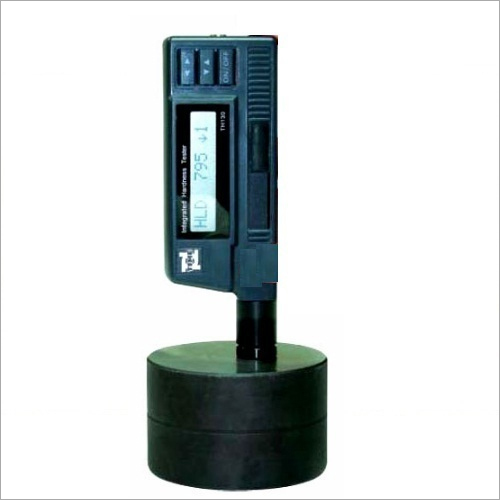
Tell us about your requirement

Price:
Quantity
Select Unit
- 50
- 100
- 200
- 250
- 500
- 1000+
Additional detail
Mobile number
Email


 Send Inquiry
Our Products
- PH Meter
- TDS Meter
- Pen Type Thermometer
- Moisture Meter
- ORP Meter
- Glass And Quartz Corvette
- Digital Hygrometer
- Infrared Thermometer
- Altimeter And Barometer
- Haemocytometer And Blood Counting Chamber Kit
- Digital Micrometer And Caliper
- Data Logger
- Countdown Timer
- Hardness Tester
- Turbidity Meter
- PH Electrode
- RefrectoMeter
- Euteck Ph Meter
- Tachometers
- Dissolved Oxygen Meter
- Hand Held Anemometer
- Metravi Digital Tachometer
- Hygrometer Gauge
- Tds Meter - Water Purity Tester
- Insize Micrometer
- Refecto Meter
- Aneroid Barometer
- Orp Electrode
- Hanna Equipment
- Refracto Meter
- Garmin Gps Handheld
- Digital Anemometers
- Thermometer
- Refracto Meters
- Gloss Meters
- Countdown Timer And Counter
- Distance Meter And Platinum Crucibles
- Glass And Quartz Cuvette
- Digital Thermometer
- Glass Cuvette
- Ph Tester
- Paper Moisture Meter
- Hydrogen meter
- Breathalyzer Tester
- Grain Moisture Meter
- Digital Vernier Calliper
- Digital Grain Moisture Meter


Plot No. E-121, Street No. 3/9, Hardev Nagar, Jharoda Mazra,Delhi - 110084, India

Mr Arvind Shukla
(Proprietor)
Mobile :08045478879
 Send Inquiry
 Send SMS
Developed and Managed by Infocom Network Private Limited.
